Workplace safety doesn’t hinge on annual training alone. Real change happens in the daily conversations—the five-to-ten-minute huddles where risks are named, awareness is sharpened, and habits are shaped. Toolbox talks are those moments. But without the right topics, they become routine check-ins instead of catalysts for safety culture.
Choosing the right toolbox talk topics isn’t about ticking a box. It’s about targeting real risks, addressing common oversights, and empowering workers to act. Below is a focused list of high-impact toolbox talk topics, why they matter, and how to deliver them effectively.
Why Toolbox Talks Work—When Done Right
Too many toolbox talks fail because they’re repetitive, vague, or disconnected from actual site conditions. A talk on “general safety” won’t stick. But one that covers “how to secure a ladder on uneven ground” does.
Effective toolbox talks: - Address a specific hazard - Last 5–10 minutes - Involve worker input - Relate to current tasks
Example: Before roof work begins, a talk on fall protection anchorage points—using the actual harnesses and lanyards on site—creates tangible learning. Workers point out weak spots. Supervisors clarify standards. Everyone leaves aligned.
The best topics target recurring incidents, new equipment, changing conditions, or near misses.
1. Fall Protection: Still the #1 Killer on Sites
Falls remain the leading cause of construction fatalities. Yet too many workers assume harnesses and guardrails are “someone else’s job.”
Key talking points: - Proper harness fit and inspection (show a damaged strap) - Anchor point strength (must hold 5,000 lbs per worker) - Ladder safety: 3-point contact, 4:1 ratio - Guardrails vs. personal fall arrest systems
Real mistake: A worker leaned too far from a lift, thinking the railing was enough. He wasn’t tied off. Result: a 12-foot fall and a fractured pelvis. Prevention: Reinforce that fall protection isn’t optional—even for “quick” tasks.
Use visual aids: bring in a harness, show wear points, demonstrate D-ring placement.
2. Hand and Power Tool Safety
Tools are so familiar that workers become complacent. Damaged cords, missing guards, improper PPE—these slip under the radar.
Focus areas: - Pre-use inspection checklist - Double-insulated tools vs. grounding - PPE: safety glasses, hearing protection, cut-resistant gloves - Lockout/tagout for maintenance
Common error: Using a circular saw without a blade guard because “it’s faster.” One slip and it’s a life-altering injury. Fix: Make inspections mandatory. Assign a tool checker weekly.
Include a quick demo: show a frayed cord, then compare it to a properly maintained one.
3. Hazard Communication (HazCom) and Chemical Safety
Workers handle solvents, adhesives, paints, and cleaning agents daily. Many don’t read labels or understand SDS (Safety Data Sheets).
Talk points: - Label elements: pictograms, signal words, hazard statements - Proper storage (flammables in approved cabinets) - Ventilation needs - Skin and respiratory protection
Example: A plumber mixed drain cleaner and bleach to “speed things up.” Toxic fumes filled the basement. Two workers hospitalized. Lesson: Emphasize compatibility and mixing dangers.

Bring an SDS sheet on-site. Have a worker read the first aid measures section aloud.
4. Electrical Safety: Shock, Arc Flash, Lockout
Electrical incidents are often fatal and usually preventable. The risk isn’t just high voltage—it’s faulty extension cords, overloaded outlets, and wet conditions.
Critical points: - Assume all wires are live - Use GFCI protection on all outdoor circuits - One-hand rule when testing live panels - Proper PPE for arc flash (flash suits, face shields)
Misconception: “Low voltage won’t hurt me.” 120V can stop a heart. Action step: Ban daisy-chained extension cords—replace with temporary power distribution boxes.
Conduct a walkaround: inspect cords, look for taped splices, check outlet loading.
5. Caught-In/Between Hazards
These include trench collapses, pinch points in machinery, and backing vehicles. They’re less frequent but often deadly.
Discussion topics: - Trench shoring requirements (sloping, shielding) - Spotter use for heavy equipment - Machine guarding (never bypass interlocks) - Safe distances around operating machinery
Near miss: A worker walked behind an excavator during a swing cycle. The operator didn’t see him. Outcome: Site-wide rule implemented: “No one behind equipment unless radio contact and visibility confirmed.”
Use a real site map to mark danger zones.
6. PPE: More Than Just Wearing It
Hard hats, vests, steel toes—checking a box isn’t enough. Workers often wear damaged or incorrect PPE.
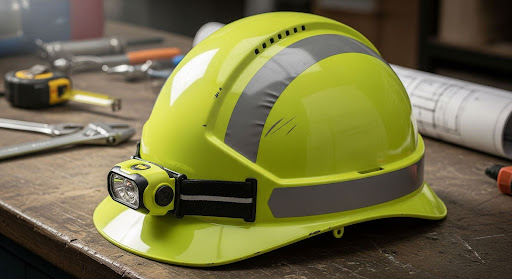
Cover: - When each type is required (e.g., high-vis at night) - Inspection: cracks, degradation, fit - Limitations (e.g., hard hats don’t protect against side impacts)
Problem: Workers wear hard hats backwards because the brim “gets in the way.” But suspension systems are designed for front-facing impact. Solution: Train on proper use and model correct wear at leadership level.
Do a “PPE audit”: have workers inspect their own gear and report issues.
7. Heat Stress and Cold Exposure
Environmental hazards don’t always cause immediate injury—but they escalate fast.
For heat: - Early signs: headache, dizziness, cramps - Hydration: drink water every 15–20 minutes, not when thirsty - Work/rest cycles in high heat
For cold: - Layering: wick, insulate, protect - Frostbite signs: numbness, white or gray skin - Buddy system for early detection
Case: A roofer collapsed midday in July. Core temp: 104°F. He’d drunk one bottle of water by noon. Change: Implemented mandatory cooling breaks and shaded rest areas.
Use a heat index chart. Post it near break areas.
8. Lifting and Ergonomics
Back injuries are among the most common—and most preventable—workplace issues.
Teach: - Proper lifting: squat, keep back straight, lift with legs - Team lifts for loads over 50 lbs - Use mechanical aids (dollies, hoists)
Error: Twisting while lifting a conduit box. Result: herniated disc. Prevention: Mark heavy items with weight labels. Assign lift teams.
Demonstrate wrong vs. right: have two workers lift the same object—incorrectly and correctly.
9. Working at Height: Beyond Fall Protection
Even with harnesses, working at height introduces risks like dropped objects, unstable platforms, and weather.
Talk about: - Tool tethering (wrenches, drills) - Secure platforms: no makeshift scaffolds - Weather impact: wind, rain, ice - Emergency rescue plan for suspended workers
Mistake: Leaving a hammer on a roof edge. It fell, hit a worker below. Helmet saved him, but it was close. Fix: Enforce tool lanyards. Fine for non-compliance.
Do a “dropped object survey”: walk under work areas and look up.
10. Mental Fatigue and Situational Awareness
Alertness matters. A distracted worker is a high-risk worker.
Focus on: - Signs of fatigue: slow reaction, poor focus - Shift length and rest - Communication breakdowns - Staying present during repetitive tasks
Scenario: A laborer was texting while walking near a trench. He didn’t hear the spotter yell “backing!” Result: Narrow miss with a loader.
Encourage “heads-up” culture. Start each talk with: “What’s your focus today?”
How to Run an Effective Toolbox Talk
It’s not just the topic—it’s how you deliver it.
Best practices: - Hold talks at the start of shift, near the work area - Keep it short: 5–10 minutes max - Engage workers: ask questions, not lectures - Rotate facilitators to build ownership - Document with sign-in sheets and topic logs
Avoid death-by-PowerPoint. Use real tools, site conditions, or incident photos (without identifying individuals).
Sample Weekly Toolbox Talk Schedule
| Day | Topic | Focus Area |
|---|---|---|
| Monday | Ladder Safety | 3-point contact, setup |
| Tuesday | Eye Protection | Impact vs. chemical hazards |
| Wednesday | Fire Extinguisher Use | PASS method, locations |
| Thursday | Noise Exposure | Hearing test results, PPE |
| Friday | Emergency Evacuation | Routes, muster points |
Rotate monthly themes: fall protection, electrical, equipment, etc.
Closing: Turn Topics Into Action
Toolbox talks shouldn’t be a compliance chore. They’re an opportunity to reinforce safety as a shared value. Pick topics that reflect real risks. Use real examples. Encourage dialogue. And always, always follow up.
Don’t just talk—act. If a worker reports a damaged harness, replace it immediately. That response speaks louder than any safety slogan.
Start next week with one focused talk. Choose a topic tied to yesterday’s near miss, tomorrow’s task, or last month’s incident report. Make it real. Make it matter.
FAQ
What are the most common toolbox talk topics? Fall protection, PPE, hand tool safety, electrical hazards, and hazard communication are the most frequently covered due to their high incident rates.
How often should toolbox talks be held? Weekly is standard, but high-risk tasks or changing conditions may require daily talks.
Who should lead a toolbox talk? Supervisors typically lead, but rotating among experienced team members increases engagement and ownership.
Do toolbox talks need to be documented? Yes. Sign-in sheets with names, topics, and dates help prove compliance during audits or investigations.
Can toolbox talks reduce workplace incidents? Yes—when consistent, relevant, and interactive, they reinforce safe behaviors and catch hazards early.
Should toolbox talks be the same across industries? No. Topics must reflect specific risks: construction focuses on falls, manufacturing on machine guarding, utilities on electrical safety.
How long should a toolbox talk last? Aim for 5 to 10 minutes. Long enough to cover the hazard, short enough to hold attention.
FAQ
What should you look for in Essential Toolbox Talk Topics for Safer Workplaces? Focus on relevance, practical value, and how well the solution matches real user intent.
Is Essential Toolbox Talk Topics for Safer Workplaces suitable for beginners? That depends on the workflow, but a clear step-by-step approach usually makes it easier to start.
How do you compare options around Essential Toolbox Talk Topics for Safer Workplaces? Compare features, trust signals, limitations, pricing, and ease of implementation.
What mistakes should you avoid? Avoid generic choices, weak validation, and decisions based only on marketing claims.
What is the next best step? Shortlist the most relevant options, validate them quickly, and refine from real-world results.